India's Chandrayaan-3 Moon Mission: A Remarkable Leap in Space Exploration
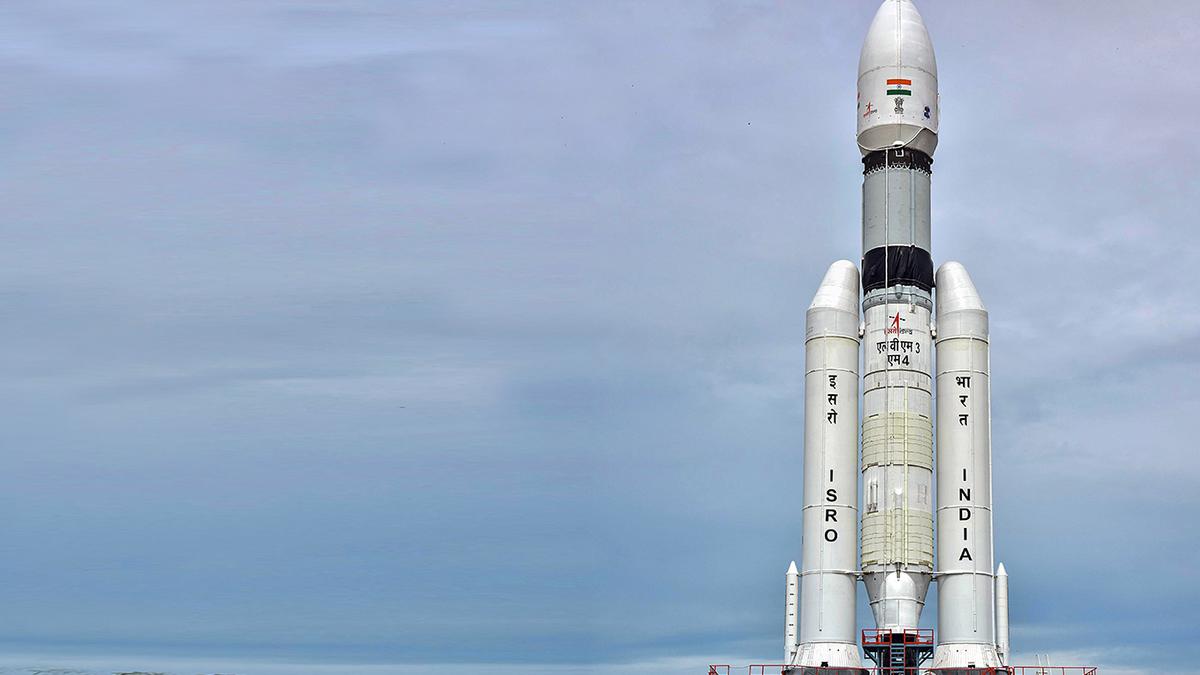
India's Chandrayaan-3 mission has taken a significant step towards becoming the fourth country to achieve a controlled landing on the moon. The spacecraft, named after the Sanskrit term for "moon vehicle," was successfully launched from the Satish Dhawan Space Center in Sriharikota, Andhra Pradesh. Spectators gathered at the space center, while over a million viewers tuned in on YouTube to witness this historic event.
The Indian Space Research Organization (ISRO) confirmed via Twitter that Chandrayaan-3 is now in a "precise orbit" and has begun its journey towards the moon, assuring that the spacecraft's health is normal. Indian Prime Minister Narendra Modi expressed his excitement on Twitter, describing the mission as a new chapter in India's space exploration. He commended the dedication and ingenuity of the scientists involved.
Scheduled to land on August 23, Chandrayaan-3 represents India's second attempt at a soft landing on the moon. The previous effort with Chandrayaan-2 in 2019 encountered a setback when the rover failed to land as planned. However, India's first lunar probe, Chandrayaan-1, successfully orbited the moon in 2008 before intentionally crash-landing onto its surface.
Chandrayaan-3, developed by ISRO, consists of a lander, propulsion module, and rover. Its primary objective is to safely land on the lunar surface, gather data, and conduct scientific experiments to expand our understanding of the moon's composition. Only three other nations—the United States, Russia, and China—have accomplished the challenging feat of a soft landing on the moon.
Indian engineers have dedicated years to prepare for this mission, aiming to land Chandrayaan-3 in the rugged terrain of the moon's unexplored South Pole. In its previous missions, India's Chandrayaan program made significant discoveries, including the detection of water molecules on the moon's surface during Chandrayaan-1. Despite the setback of Chandrayaan-2's crash-landing, Prime Minister Modi expressed his unwavering commitment to India's space program and aspirations.
Prime Minister Modi described the launch day as a momentous occasion that will be remembered in India's space sector. He emphasized that this mission carries the hopes and dreams of the nation. The Chandrayaan-3 mission, with an estimated cost of around $75 million, is expected to cover a distance of over 300,000 kilometers (186,411 miles) to reach the moon in the coming weeks, according to Modi's statements.
As Chandrayaan-3 embarks on its lunar journey, India eagerly anticipates the successful completion of this ambitious mission, which has the potential to contribute significantly to our knowledge of the moon and propel India's space program further into the future.