Tajikistan's Historic Battlegrounds: Unveiling Its Most Pivotal Conflicts
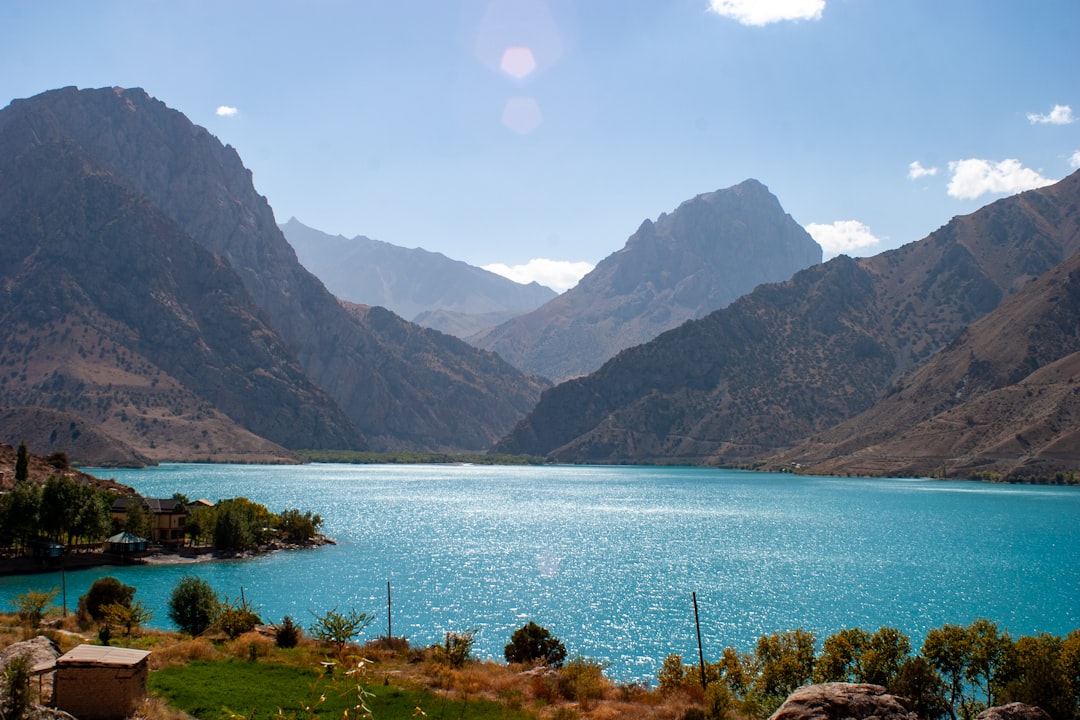
Tajikistan, a landlocked nation nestled in the heart of Central Asia, boasts a rich and complex history often shaped by monumental clashes. Its strategic location, at the crossroads of ancient trade routes like the Silk Road, made it a coveted territory for empires and invaders throughout millennia. Understanding the most important historical battles of Tajikistan is crucial to grasping the nation's resilience, cultural development, and unique identity. This guide explores the defining conflicts that etched Tajikistan's path through time.
Ancient Echoes: Early Struggles for Control
The very landscape of Tajikistan has witnessed the rise and fall of ancient powers, with its valleys and mountains serving as battlegrounds for control over fertile lands and strategic passes.
Alexander the Great's Eastern Campaign
One of the earliest and most impactful foreign incursions was the campaign of Alexander the Great in the 4th century BCE. After conquering the Achaemenid Empire, Alexander pushed into Sogdiana (a historical region encompassing much of modern-day Tajikistan) and Bactria.
- Key Impact: His conquest, though brief, introduced Hellenistic culture and political structures, leaving a lasting, albeit subtle, imprint on the region's art and governance for centuries. The fierce resistance he faced from local leaders like Spitamenes also highlighted the independent spirit of the Tajik ancestors.
The Rise and Fall of Empires: Kushans and Hephthalites
Following Alexander, the region became a key part of powerful empires. The Kushan Empire (1st-3rd century CE) established a flourishing multi-cultural state. Later, the Hephthalites, or White Huns (5th-6th century CE), a nomadic confederation, dominated Central Asia, often engaging in significant battles against the Sasanian Persians to the west.
- Key Impact: These periods saw continuous power struggles and territorial disputes, fostering a martial culture alongside significant urban and cultural development. The shifting allegiances and conflicts laid the groundwork for future independent states.
The Islamic Dawn and Regional Empires
The 7th and 8th centuries brought a new era with the expansion of Islam into Central Asia, fundamentally altering the region's religious and political landscape.
The Arab Conquests: A New Era Begins
The Arab conquests of Central Asia were marked by a series of fierce battles, with local rulers often resisting the incoming Islamic forces. The regions that constitute modern Tajikistan eventually fell under the control of the Umayyad and later Abbasid Caliphates.
- Key Impact: This period was transformative, leading to the widespread adoption of Islam and the integration of the region into the broader Islamic world. It introduced new administrative systems and a sophisticated literary tradition, shaping the future Tajik identity.
The Samanid Dynasty: A Golden Age of Tajik Identity
The Samanid Dynasty (9th-10th century CE) emerged as one of the most significant and influential Persianate dynasties in Central Asia. Centered in Bukhara and Samarkand (both near modern Tajikistan), their rule is often considered a golden age for the ancestors of the Tajiks, fostering a resurgence of Persian culture and language.
- Key Impact: The Samanids fought numerous battles to secure their independence from the Abbasid Caliphate and to expand their territories against rivals. Their success solidified a distinct regional identity and laid foundational cultural elements that persist in Tajikistan today.
Mongol Fury and Dynastic Shifts
The 13th century ushered in an era of unprecedented upheaval and destruction with the arrival of the Mongol Empire.
Genghis Khan's Invasion: Reshaping Central Asia
The Mongol invasion led by Genghis Khan in the early 13th century was catastrophic for Central Asia. Cities were razed, populations decimated, and ancient irrigation systems destroyed. The region's vibrant urban centers, including those in and around modern Tajikistan, bore the brunt of this fury.
- Key Impact: The Mongol conquests irrevocably altered the demographics and political geography of the region, ending the era of established Persianate rule and paving the way for new Turco-Mongol dynasties.
Timur's Campaigns: Consolidating Power
Centuries later, the ambitious conqueror Timur (Tamerlane) rose in the late 14th century, establishing a vast Timurid Empire. His numerous military campaigns across Central Asia, Persia, and beyond frequently involved the territories of present-day Tajikistan, as he consolidated power and expanded his domain.
- Key Impact: Timur's rule, despite its ferocity, ushered in the Timurid Renaissance, a period of immense artistic, architectural, and scientific flourishing that profoundly impacted the cultural landscape of Central Asia, including areas now part of Tajikistan.
The Great Game and Russian Expansion
The 19th century witnessed the geopolitical struggle known as "The Great Game" between the British and Russian Empires for influence in Central Asia.
The Russian Conquest: Shifting Allegiances
As the Russian Empire expanded southward, it systematically absorbed the Central Asian Khanates and Emirates. Battles against the Emirate of Bukhara and the Khanate of Kokand, which held sway over parts of modern Tajikistan, led to the region's incorporation into the Russian Empire.
- Key Impact: This conquest ended centuries of local rule and ushered in a period of direct Russian influence, eventually leading to the formation of the Tajik Soviet Socialist Republic and the modern borders of Tajikistan.
The Basmachi Revolt: Resistance to Soviet Rule
Following the Russian Revolution of 1917, the newly formed Soviet Union faced widespread resistance in Central Asia known as the Basmachi Revolt (early 1920s-1930s). This protracted armed struggle involved various groups, including Tajiks, fighting against Soviet control and for self-determination.
- Key Impact: While ultimately suppressed, the Basmachi movement represents a significant chapter of resistance, highlighting the deep desire for independence and serving as a crucial moment in the formation of Soviet Central Asia.
Modern Struggles: Independence and Civil Strife
The late 20th century brought renewed challenges and conflicts as Tajikistan navigated its path to independence.
The Tajik Civil War: A Nation Divided
Immediately following its independence from the Soviet Union in 1991, Tajikistan plunged into a devastating Civil War (1992-1997). This conflict pitted the newly formed government against various opposition groups, often along regional and ideological lines.
- Key Impact: The Civil War caused immense loss of life, displacement, and economic devastation. Its resolution, through a peace agreement, was a pivotal moment in shaping the modern Tajik state, emphasizing the fragility of peace and the importance of national unity.
From ancient Sogdiana to modern independence, the lands of Tajikistan have been forged in the crucible of conflict. These pivotal battles not only determined political control but also shaped the cultural, ethnic, and religious fabric of a resilient nation, whose history is a testament to its enduring spirit.