Nimona: A Resilient Journey from Page to Screen, Celebrating Queer Identity and Empathy
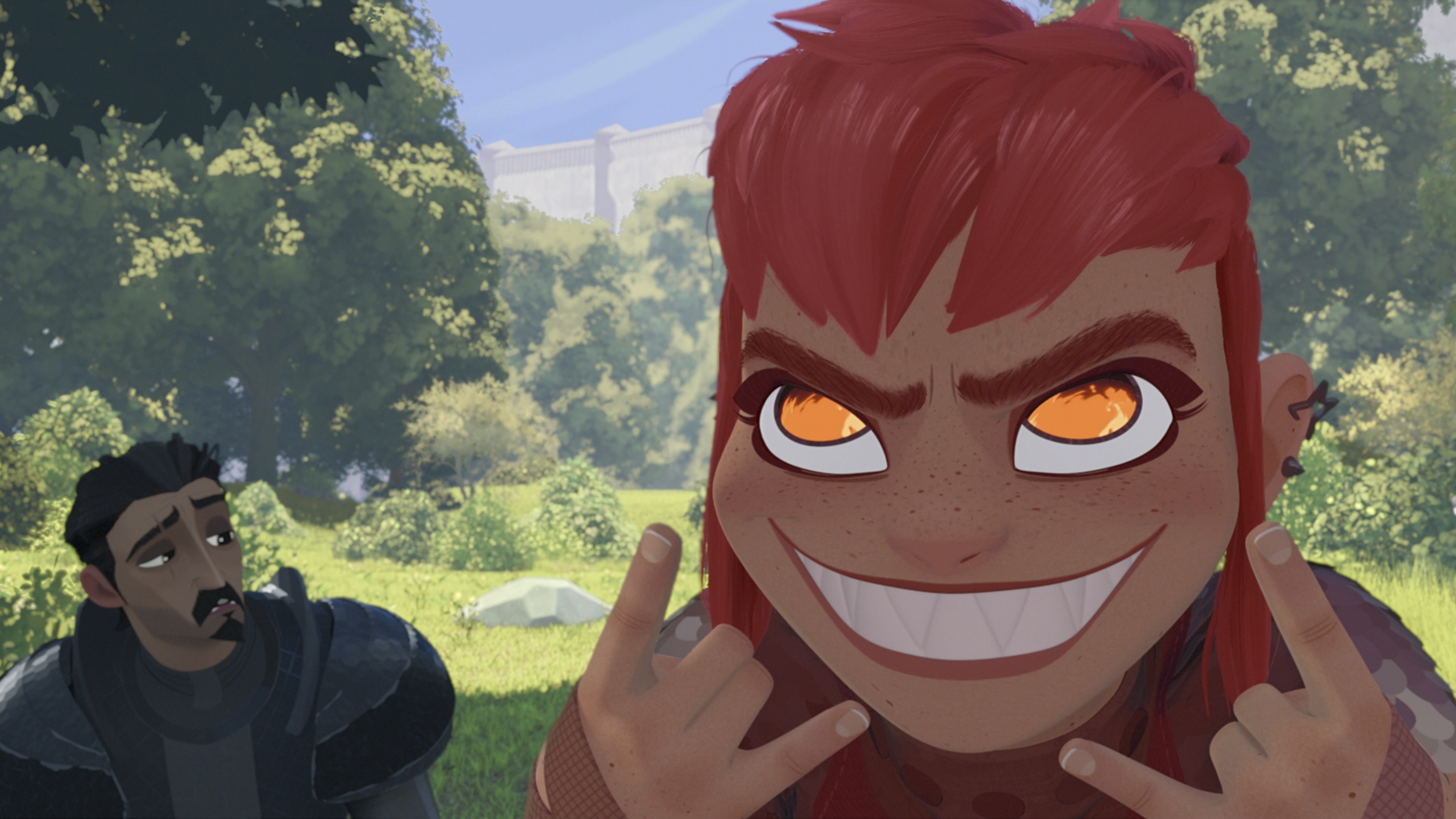
Netflix's new animated film Nimona has captivated audiences not only for its extraordinary story but also for its remarkable journey from the pages of a graphic novel to the silver screen. Despite facing setbacks, the film's revival by Annapurna Pictures and Netflix showcases the determination of its team. Now, viewers can finally immerse themselves in the eye-popping futuristic medieval world of Nimona, where a mischievous shapeshifter and a rogue knight take center stage and steal hearts along the way.
Nimona stands out as an exceptional film in its own right. Its unique animation style, blending 3D animation with graphic 2D stylings, transports us to a realm where Nimona (voiced by Chloë Grace Moretz) unleashes havoc and endears herself to the audience. Beyond the stunning visuals and thrilling action sequences, Nimona delves into themes of individuality, identity, and acceptance, particularly resonating with the queer community. In an era where LGBTQ rights face ongoing challenges, Nimona emerges not just as an outstanding fantasy film but also as an essential voice.
The story introduces us to Sir Ballister Boldheart (voiced by Riz Ahmed), the first commoner to become a knight. Falsely accused of a crime, he must evade the forces of the Institute, including his former lover Sir Ambrosius Goldenloin (voiced by Eugene Lee Yang). Amidst this turmoil, Nimona enters the scene—a spirited shapeshifter with a desire to defy the Institute. Believing Ballister to be a villain, she offers her services as a sidekick, leading to a compelling and unpredictable partnership. As they navigate their differences and confront their shared adversaries, the film emphasizes their status as outsiders and explores the potential for redemption.
While the film diverges from the darker aspects of ND Stevenson's original comic, the characters and their relationships remain faithful to the source material. Nimona's animation serves as a vehicle for breathtaking action sequences, showcasing the shapeshifter's versatility and keeping audiences enthralled. The setting seamlessly combines medieval aesthetics with futuristic technology, resulting in a visually stunning world that feels lived-in and enriches the film's narrative.
Notably, Nimona stands as an explicitly queer story, portraying the heartfelt relationship between Ballister and Ambrosius. The film unapologetically centers their love, while also featuring the voices of LGBTQ actors, including Eugene Lee Yang, Indya Moore, Julio Torres, and RuPaul. Nimona's own journey as a character resonates deeply with queer viewers, as she faces discrimination due to her differences. Her refusal to conform to societal norms echoes powerful themes of transness and gender nonconformity, without explicitly discussing them. By giving these themes ample space, Nimona stands out as a testament to inclusion and acceptance.
Moreover, the film fearlessly tackles heavier subjects such as self-harm and suicidal ideation, shedding light on the struggles faced by LGBTQ and trans youth. With sensitivity and empathy, Nimona encourages understanding and acceptance, exemplified through Ballister's personal growth as he learns to embrace Nimona for who she truly is. The film invites viewers to recognize the importance of treating others with respect and compassion, regardless of their differences.
Balancing its deeper themes with a touch of absurdity, Nimona remains a vital celebration of individuality and acceptance. With its boldness, humor, and heartfelt moments, the film invites audiences to embark on an extraordinary journey that leaves a lasting impression. Nimona's resilience and unwavering commitment to queer representation make it a must-watch experience for all.