Europe's Most Iconic Staple Dishes
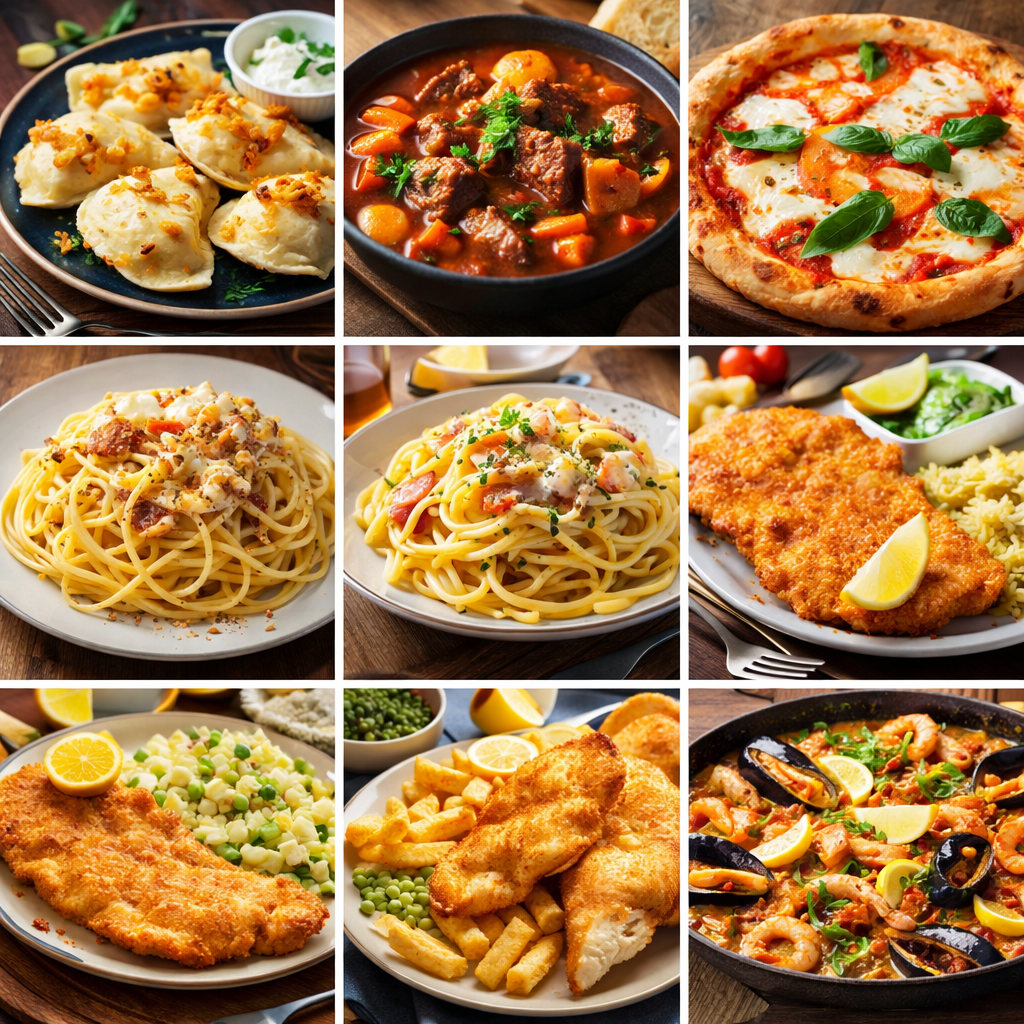
Forget the complicated gourmet trends for a moment. If you travel across Europe, you eventually realize that the continent is held together by a few reliable, heavy-hitting dishes that have fed families for centuries. These aren't just meals; they are the culinary backbone of their respective nations.
The Comfort of the Potato: Pierogi and Goulash
In Central and Eastern Europe, survival used to depend on ingredients that could withstand a harsh winter. This gave birth to the Pierogi in Poland. These are essentially dumplings made of unleavened dough, stuffed with anything from mashed potatoes and fried onions to sauerkraut or minced meat. They are boiled, then often pan-fried in butter until the edges get that specific golden crunch.
Further south in Hungary, you find Goulash. While many international versions look like a thick stew, a traditional Hungarian Gulyás is often more of a rich, paprika-heavy soup. It relies on slow-cooked beef, onions, and potatoes. The secret is the quality of the lard and the depth of the paprika, providing a heat that warms you from the inside out.
The Art of Simplicity: Pasta and Pizza
It is impossible to discuss European staples without landing in Italy. However, the true staples aren't the over-the-top pasta dishes seen in tourist traps. It is the Pasta Carbonara of Rome—a masterclass in using just four ingredients: eggs, hard cheese (Pecorino Romano), guanciale (cured pork jowl), and black pepper. There is no cream involved; the silkiness comes entirely from the emulsion of egg and cheese.
Then there is the Neapolitan Pizza. Born in Naples as a fast, cheap meal for the working class, it relies on a specific soft crust that blisters in a wood-fired oven. A true Margherita is just tomatoes, mozzarella, basil, and olive oil, representing the colors of the Italian flag.
The Golden Crunch: Schnitzel and Fish and Chips
In the German-speaking world, the Wiener Schnitzel is the undisputed king of the dinner table. Originally from Vienna, this thinned-out veal cutlet is breaded and fried until the coating puffs up like a golden cloud. It is almost always served with a wedge of lemon and a side of potato salad.
Across the channel, the United Kingdom offers Fish and Chips. What started as a cheap, nutritious meal for the Victorian working class became a national institution. The fish (usually cod or haddock) is dipped in a simple flour and water (or beer) batter and fried until crispy, served alongside "thrice-cooked" thick-cut chips and doused in malt vinegar.
The Mediterranean Heart: Paella and Moussaka
In Spain, Paella is more than just a rice dish; it is a social event. Originating in Valencia, it was traditionally cooked over an open fire in a wide, shallow pan. The goal is the socarrat—the toasted, caramelized layer of rice at the very bottom of the pan that packs the most flavor.
Heading east to Greece, Moussaka reigns supreme. This layered bake is the Mediterranean answer to lasagna. It features sautéed eggplant, minced meat (usually lamb or beef) cooked in a tomato base, and a thick topping of béchamel sauce that turns golden brown in the oven. It is heavy, rich, and arguably the most recognizable comfort food in the Balkans.
Every one of these dishes tells a story of the land it comes from. They use what was available—wheat from the plains, fish from the coasts, and hardy vegetables from the soil—to create flavors that have stood the test of time.